Overview
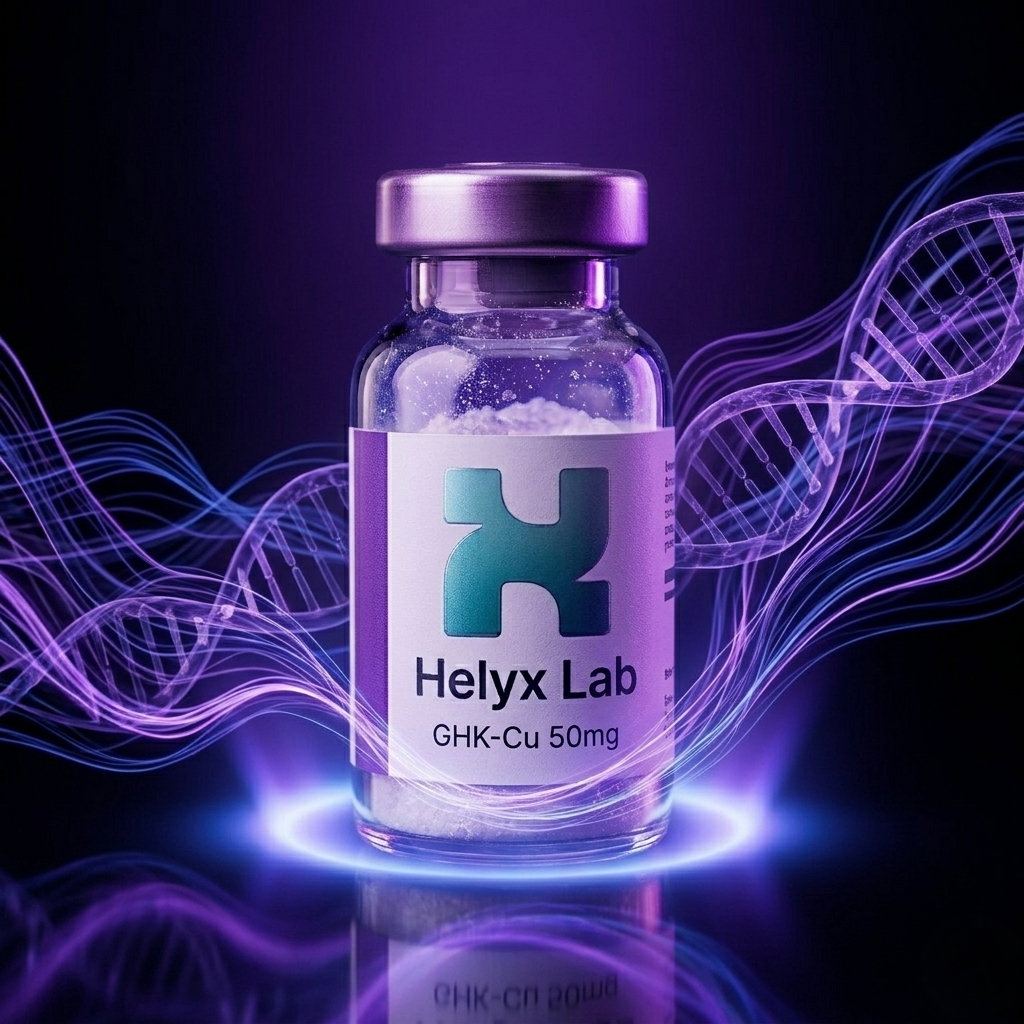
GHK-Cu (Glycine-Histidine-Lysine Copper) is a naturally occurring copper-binding tripeptide first identified in human plasma in 1973 by Dr. Loren Pickart. Its plasma concentration declines significantly with age — from approximately 200 ng/mL in youth to around 80 ng/mL after age 60 — a decline that correlates directly with reduced tissue repair capacity and accelerated biological aging. GHK-Cu’s primary mechanism is not copper delivery — it is the regulation of gene expression at scale, shifting the activity of over 4,000 genes toward a healthier, more regenerative state.
What it does
GHK-Cu activates fibroblasts to produce more collagen, elastin, and glycosaminoglycans — the structural proteins responsible for skin density, wound healing, and connective tissue integrity. It suppresses core inflammatory mediators including NF-KB p65, IL-6, and TNF-alpha while upregulating antioxidant pathways including Nrf2. It promotes angiogenesis, repairs lung and gut tissue, activates DNA repair genes, and in neurological research has shown the ability to inhibit improper protein folding — a hallmark of Alzheimer’s and Parkinson’s disease. One study reported a 70% increase in collagen synthesis — exceeding both vitamin C and tretinoin in direct comparison.
Research areas
Skin rejuvenation and anti-aging — collagen, elastin, wrinkle reduction · Hair growth and follicle stimulation · Wound healing and tissue repair · Anti-inflammatory and antioxidant research · Lung and gastrointestinal tissue healing · Neuroprotection and neurodegeneration research · Longevity and biological age reduction
Key facts
| Form |
Lyophilised powder — requires reconstitution with bacteriostatic water |
| Storage |
Lyophilised: -20°C, stable up to 2 years. Reconstituted: 2–8°C, use within 30 days |
| Purity |
≥99% — third-party COA verified, batch-specific documentation included |
| Route |
Subcutaneous injection or topical application |
For research use only. Not for human consumption. This product is not approved for human use by the FDA or any regulatory body.